For years, businesses have focused on one thing when it comes to online visibility: Google search rankings.
While Google still matters, the way people find information online is changing rapidly. Increasingly, people are turning to AI tools like ChatGPT, Grok, Claude, Perplexity, Gemini and Copilot to ask questions, research products, and get recommendations.
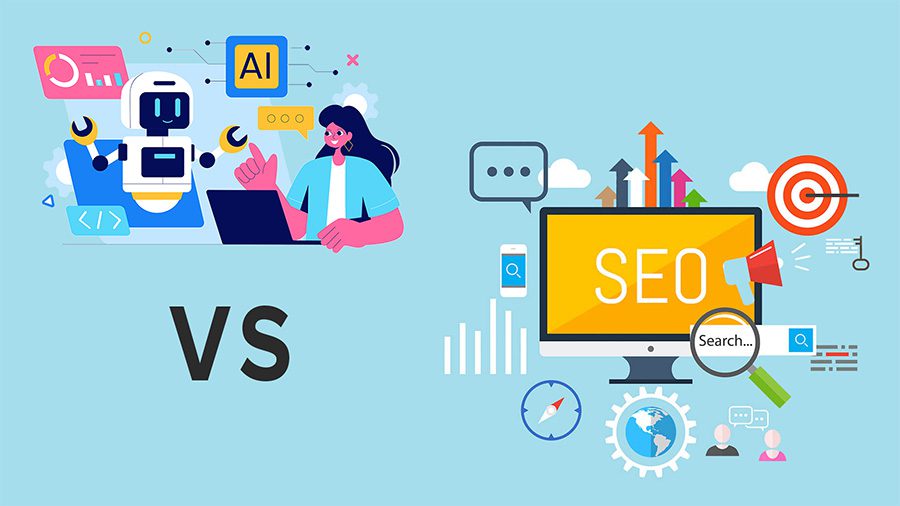
This shift is creating what many marketers are calling the new SEO world order.
It’s no longer just about ranking on Google — it’s about being visible wherever people search for answers, including inside AI platforms.
For small businesses, this doesn’t mean throwing out SEO. Instead, it means expanding how we think about search visibility.
Search Is Changing: The Rise of AI Discovery
Traditional search engines show a list of links.
AI tools deliver direct answers, summaries, and recommendations.
This changes how people interact with information online.
Recent industry trends highlight how quickly this shift is happening:
- Over 400 million people use ChatGPT weekly (OpenAI data).
- Perplexity AI has surpassed 10 million monthly users and continues growing rapidly.
- Google now integrates AI summaries directly into search results through AI Overviews.
- Research suggests up to 30–40% of younger users begin research with AI tools rather than search engines.
Instead of clicking through ten links, users often ask AI a question like:
“What’s the best platform for a small business website?”
“How do I improve my online presence?”
“What should I look for in an e-commerce setup?”
The AI then summarises answers and recommends sources.
If your website content isn’t clear, structured, and trustworthy, AI tools may never mention you.
What This Means for Business Websites
In the past, SEO focused heavily on:
- Keywords
- Backlinks
- Meta descriptions
- Ranking position
Those things still matter, but AI search introduces a new layer.
AI systems look for content that is:
- Clear and well structured
- Authoritative and trustworthy
- Helpful and informative
- Written for humans, not just algorithms
In other words, the best strategy is no longer “gaming the search engine”.
It’s demonstrating genuine expertise and providing real value.
How to Write Blogs That AI Can Discover
If you want your content to appear in AI-generated answers, your articles need to be structured in a way that machines can easily understand.
Some key principles include:
Write for real questions
Think about the actual questions customers ask.
For example:
- “How much does an e-commerce website cost?”
- “Do I need SEO for my small business?”
- “What platform should I use for online sales?”
Blogs that answer specific questions clearly are far more likely to be referenced by AI systems.
Use clear headings and structure
AI models rely heavily on structured content.
Use:
- clear headings
- short paragraphs
- bullet points
- logical sections
This makes your content easier for both humans and AI to interpret.
Focus on expertise and real experience
AI tools favour content that demonstrates genuine expertise.
For example:
Instead of generic advice like:
“A website is important for business.”
You might say:
“After helping small businesses launch e-commerce stores since 2017, we consistently see three factors determine success…”
Specific experience builds credibility.
Keep content helpful, not promotional
AI tools tend to ignore overly promotional content.
Instead of pushing a sale, focus on:
- education
- explanations
- useful insights
- practical tips
The more useful your content is, the more likely it is to be referenced.
Maintain a consistent publishing strategy
Regularly publishing helpful content builds topical authority.
Over time, this signals to search engines and AI systems that your website is a trusted source of information.
Top 5 Tips to Get Started with AI-Friendly SEO
If you want to adapt your website for the future of search, start with these five steps:
1. Answer real customer questions
Write blogs that solve problems your clients actually have.
2. Focus on quality over quantity
A few high-quality articles are far more valuable than dozens of thin posts.
3. Use clear headings and structured content
This helps both readers and AI systems understand your content.
4. Demonstrate your expertise
Share real insights from your work with clients.
5. Keep your website active
Regular updates signal that your business is relevant and engaged.
The Bottom Line
Search is evolving.
Google is still important, but AI-powered discovery is growing quickly.
Businesses that focus on creating clear, helpful and trustworthy content will be the ones that continue to appear in both search engines and AI recommendations.
For small businesses, this is actually good news.
You don’t need a massive marketing budget — just genuine expertise and useful content.
And if you’re already publishing helpful blogs, you’re already on the right path.